

Web Designer Portfolio: Showcasing Your Digital Masterpieces
Web Designer Portfolio: Showcasing Your Digital Masterpieces

In today’s competitive digital landscape, a web designer portfolio is essential for standing out and attracting potential clients. Your portfolio is not just a collection of your work; it reflects your skills, creativity, and professional brand. This guide will explore the elements of significant website portfolios, provide web portfolio examples, and offer inspiration to help you create a standout portfolio website.
The Importance of a Strong Web Design Portfolio
A compelling web design portfolio serves multiple purposes:
- Showcases Your Skills: It visually represents your capabilities and design style.
- Attracts Clients: A well-designed portfolio can draw in potential clients and employers.
- Demonstrates Expertise: It highlights your specialties and the industries you’ve worked with.
- Builds Credibility: A professional portfolio enhances your reputation in the design community.
Elements of the Best Portfolio Websites
When creating your portfolio, consider incorporating these key elements:
- Clean, Intuitive Design: Your portfolio should be easy to navigate and visually appealing.
- Responsive Layout: Ensure your portfolio looks great on all devices.
- Curated Projects: Showcase your best and most relevant work.
- Case Studies: Provide context and explain your design process for key projects.
- About Page: Include a brief bio and your design philosophy.
- Contact Information: Make it easy for potential clients to reach you.
Web Portfolio Examples and Inspiration
Let’s explore some top web design portfolios for inspiration:
1. Yasio by Jan Baszczok: This one-page portfolio stands out with its sleek black background and white typography. The subtle animations enhance the user experience, making it a great example of modern portfolio design.
2. Di’Nasia Berry: This model’s portfolio uses a grid layout to showcase fashion photography. The simple menu and large images allow easy navigation, demonstrating how a clean design can highlight your work.
3. Enrico Deiana: Enrico’s portfolio is notable for its multiple micro-interactions and industry-specific top-level domains. These elements create an engaging user experience that keeps visitors exploring.
Creating Your Portfolio Website
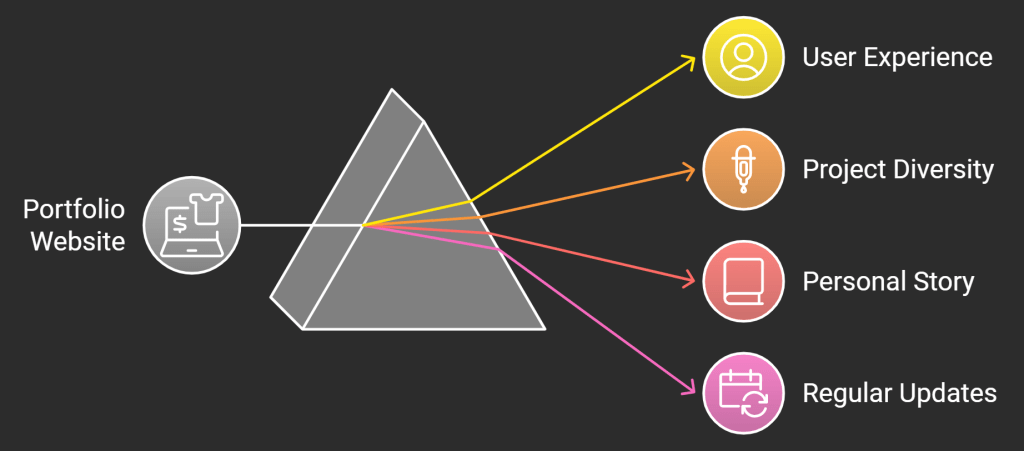
When building your portfolio website, consider these tips:
- Choose the Right Platform: Select a website builder or CMS that aligns with your skills and needs.
- Prioritize User Experience: Ensure your portfolio is easy to navigate and loads quickly.
- Showcase Diversity: Include a range of projects to demonstrate your versatility.
- Tell Your Story: Share your design journey and philosophy in your portfolio.
- Keep It Updated: Regularly add new projects and remove outdated ones.
Best Portfolio Website Design Practices
To create one of the best portfolio websites, follow these design principles:
- Consistency: Maintain a cohesive design language throughout your portfolio.
- Hierarchy: Use visual hierarchy to guide visitors through your work.
- White Space: Utilize negative space to create a clean, uncluttered look.
- Typography: Choose fonts that are both readable and reflective of your style.
- Color Scheme: Select a color palette that complements your work without overpowering it.
Portfolio Home Page Best Practices
Your portfolio home page often gives visitors a first impression of your work. Make it count by:
- Featuring Key Projects: Showcase your best work prominently.
- Including a Clear CTA: Guide visitors on what to do next (e.g., “View Projects” or “Contact Me”).
- Introducing Yourself: Briefly state who you are and what you do.
- Keeping It Simple: Avoid cluttering the home page with too much information.
Cool Portfolio Websites Features
To make your portfolio stand out, consider incorporating these terrific features:
- Interactive Elements: Add hover effects or animations to engage visitors.
- Video Backgrounds: Use short, looped videos to add dynamism to your site.
- Unique Layouts: Experiment with grid layouts or asymmetrical designs.
- Micro-interactions: Include small, functional animations to enhance user experience.
Conclusion: Crafting Your Best Web Designer Portfolio Website
Creating a portfolio is an ongoing process. As you grow and evolve as a designer, so should your portfolio. Remember, the best portfolio websites effectively showcase your skills, tell your story, and make it easy for potential clients to understand your value proposition.
With attention to detail and a commitment to showcasing your best work, you can create a portfolio that not only impresses visitors but also helps you stand out in the competitive world of web design.


Related articles

Optimize Mobile UX: Top 5 Practices for Better Engagement
Credit:- Freepik Focusing on mobile user experience is very important for online business success. Almost 60% of internet traffic comes...

The Ultimate Guide to Building a High-Performing Law Firm Website in 2025
Credit:- Canva Your law firm website design is more than just a digital presence—it’s your first impression, your brand, and...

Best Practices for MVP Development in 2025
Minimum Viable Product (MVP) development has evolved significantly in 2024, becoming a cornerstone for businesses aiming to validate ideas, attract...

Ready to Ship Your Vibe Coded App?
You've already done the hard part — validating your idea and building something that works. Let's turn it into a product your users can trust and your business can scale.