

Product Development Software Solutions: Revolutionizing Innovation and Efficiency
Product Development Software Solutions: Revolutionizing Innovation and Efficiency

Product development
Product development is a cornerstone of innovation in any industry, encompassing the entire journey from ideation to delivery. As markets become increasingly competitive, businesses rely on product development software solutions to streamline processes, enhance collaboration, and ensure successful product launches. This article delves into the significance of product development software, key features, types, tradeoffs, challenges, and how these solutions are shaping the future of product innovation.
The Role of Software in Product Development
Product development is a multifaceted process involving research, design, prototyping, testing, and deployment. Software solutions serve as a cohesive platform to manage these stages, offering:
- Efficiency: Software automates repetitive tasks, significantly reducing manual errors and freeing up valuable time for teams to focus on strategic activities. For instance, Continuous Integration and Continuous Delivery (CI/CD) tools have been adopted by 77% of organizations, streamlining development and deployment processes, which leads to faster release cycles and improved productivity.
- Collaboration: Modern software tools facilitate seamless communication among teams, regardless of their geographical locations. Platforms like Slack integrate with numerous applications, enhancing team collaboration and leading to a 30% increase in productivity by minimizing context-switching
- Visualization: Software provides advanced visualization tools such as 3D modeling and interactive prototypes that help bring concepts to life. These tools enable stakeholders to visualize the product early in the development process, allowing for better feedback and iterative improvements.
- Data Management: Software solutions centralize data management, enabling teams to analyze information effectively for informed decision-making. This capability is crucial as it allows businesses to adapt swiftly to changing market demands and consumer needs.
Key Features of Product Development Software Solutions
- Project Management Tools
- Task Allocation: Assigning roles and tracking responsibilities.
- Timelines: Setting milestones and ensuring deadlines are met.
- Gantt Charts: Visualizing project progress for better oversight.
- Collaboration and Communication
- Real-Time Updates: Synchronizing team efforts through instant updates.
- Integrated Messaging: Allowing teams to exchange ideas within the platform.
- Feedback Mechanisms: Collecting and acting on input during development.
- Design and Prototyping
- CAD Tools: Creating 2D and 3D models for products.
- Rapid Prototyping: Testing concepts quickly with minimal investment.
- Version Control: Keeping track of iterations and preventing overwrites.
- Data and Analytics
- Market Analysis: Leveraging AI to predict trends and preferences.
- Performance Metrics: Evaluating product performance pre-launch.
- Customer Insights: Gathering user data to guide future improvements.
- Testing and Quality Assurance
- Automated Testing: Identifying flaws in design or performance.
- Simulations: Predicting product behavior under real-world conditions.
- Integration Capabilities
- Compatibility with existing tools, like CRMs and ERPs, ensures a seamless workflow.
Types of Product Development Solutions
- Product Lifecycle Management (PLM)
PLM software offers end-to-end management of the product lifecycle, from concept to disposal. Popular tools include Siemens Teamcenter and PTC Windchill.- Advantages: Streamlined processes, improved collaboration, and regulatory compliance.
- Challenges: High implementation cost and complexity for small businesses.
- Computer-Aided Design (CAD)
CAD tools like AutoCAD and SolidWorks are indispensable for creating precise 2D and 3D designs.- Advantages: Accurate designs and faster prototyping.
- Challenges: Steep learning curve and significant resource requirements.
- Project Management Software
Platforms like Trello, Jira, and Asana help teams organize tasks and monitor progress.- Advantages: Intuitive interfaces and flexibility.
- Challenges: Limited customization for niche industries.
- Collaboration Tools
Cloud-based platforms like Slack and Microsoft Teams foster communication among distributed teams.- Advantages: Improved transparency and quicker decision-making.
- Challenges: Risk of data breaches without robust security measures.
- Simulation and Testing Tools
Tools such as MATLAB and ANSYS simulate real-world scenarios to test product durability and efficiency.- Advantages: Early detection of flaws.
- Challenges: High costs and extensive setup requirements.
Tradeoffs in Implementing Product Development Software
1. Cost vs. Value
While advanced software solutions can yield significant returns through efficiency and quality, the initial investment is often prohibitive for small businesses.
Solution: Opt for scalable or subscription-based tools to balance affordability and functionality.
2. Flexibility vs. Standardization
Customizable software solutions allow businesses to tailor workflows but may lead to inconsistencies. Standardized tools offer uniformity but might lack adaptability.
Solution: Choose a hybrid approach, combining core standardization with selective custom features.
3. Automation vs. Human Input
Over-reliance on automation can overlook the creative and intuitive aspects of product design.
Solution: Use automation to complement, not replace, human expertise.
Challenges in Using Product Development Software
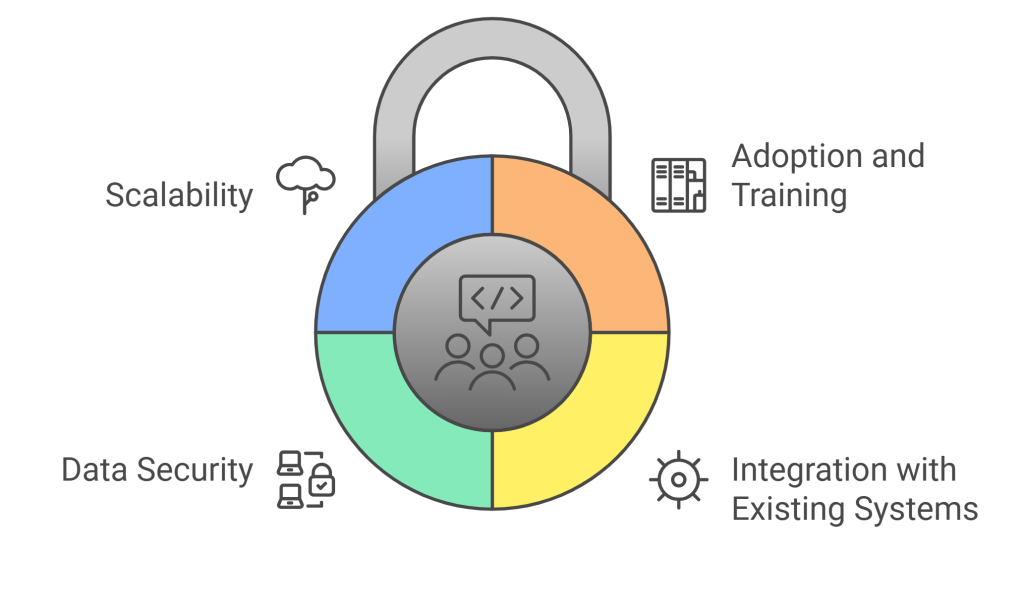
- Adoption and Training
Teams may resist new software due to unfamiliarity, requiring extensive training and onboarding. - Integration with Existing Systems
Legacy tools may not always integrate seamlessly, disrupting workflows. - Data Security
With sensitive product data stored digitally, cybersecurity becomes a top concern. - Scalability
As businesses grow, software must scale to handle increased demands, which may involve additional costs or migrations.
How Product Development Software Shapes the Future
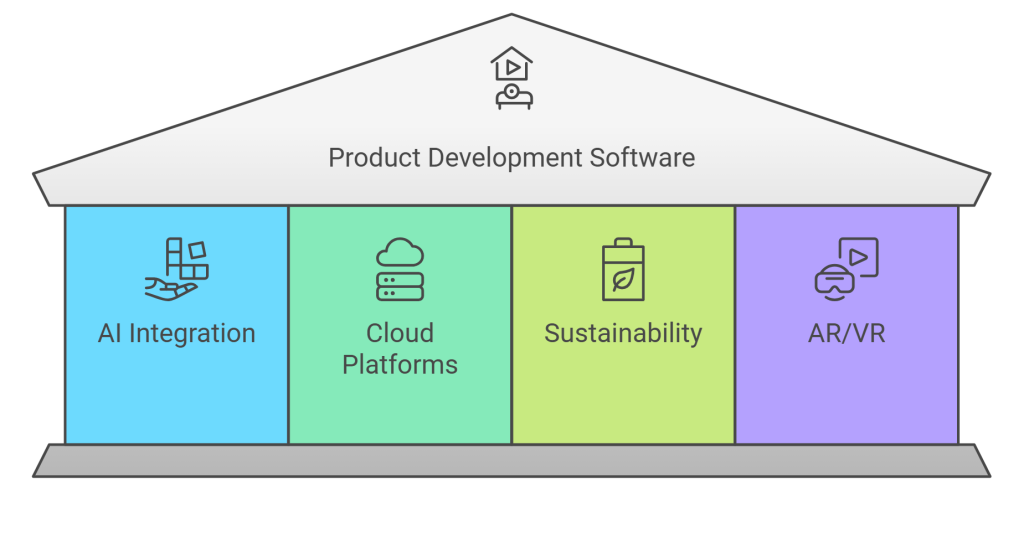
- AI and Machine Learning Integration
- Predictive analytics to foresee market trends.
- AI-driven design suggestions for enhanced innovation.
- Cloud-Based Platforms
- Accessible from anywhere, fostering global collaboration.
- Scalable cloud-based solutions for businesses of all sizes.
- Sustainability
- Tools to analyze environmental impact and optimize resource use during development.
- Augmented and Virtual Reality (AR/VR)
- Enabling immersive prototyping and user testing experiences.
Best Practices for Choosing Product Development Software
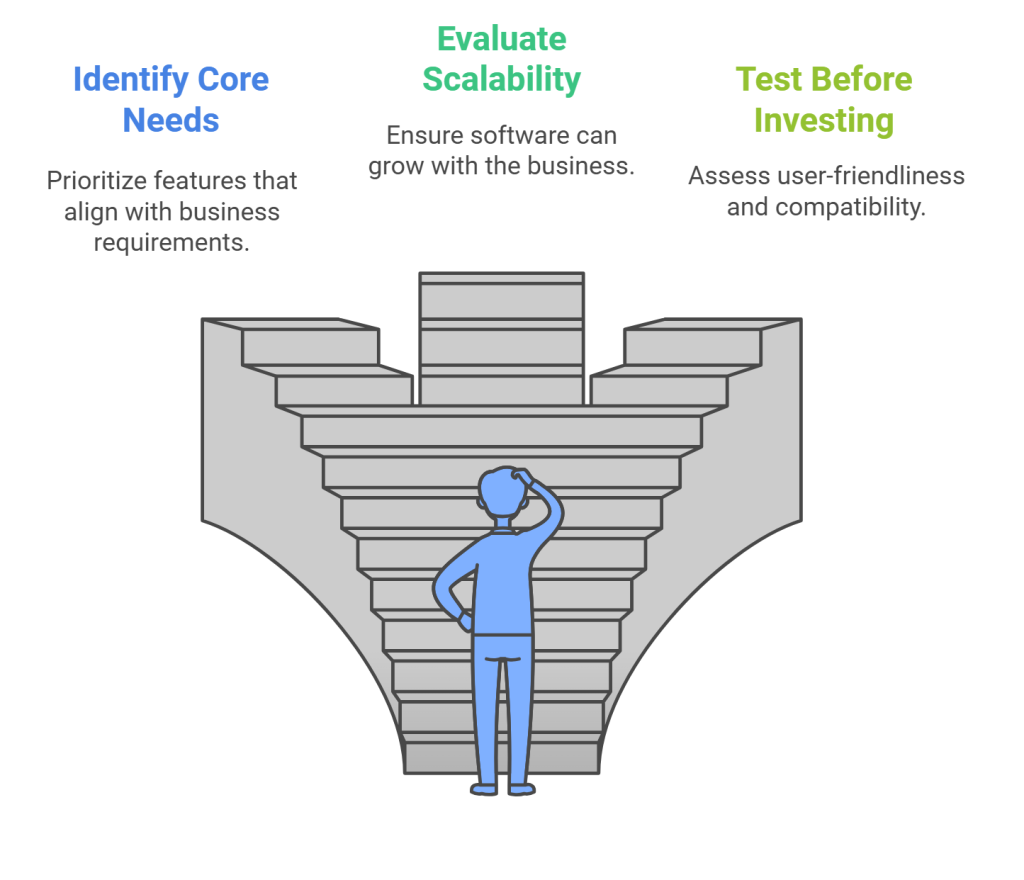
- Identify Core Needs
Clearly define your business requirements and prioritize features accordingly. - Evaluate Scalability
Ensure the software can adapt to your business’s future growth. - Test Before Investing
Use trial versions to gauge user-friendliness and compatibility. - Ensure Vendor Support
Reliable customer support is crucial for smooth implementation and maintenance. - Focus on Security
Choose solutions with robust data protection measures, including encryption and regular audits.
Conclusion
Product development software solutions are revolutionizing how businesses innovate and bring ideas to market. By automating processes, enhancing collaboration, and integrating advanced technologies, these tools empower teams to work more efficiently and deliver superior products. However, choosing the right software requires careful consideration of tradeoffs, challenges, and long-term goals. With the right strategy, businesses can unlock the full potential of product development software, driving growth and staying ahead in a competitive landscape.


Related articles

How to Create a Personal Website for College Apps Reddit:2025 Guide
Why a Personal Website Matters for College Applications A personal website can be a game-changer for your college application. It...

Top Strategies for a Professional Looking Website, Reddit-Approved:2025
Introduction: Why a Professional-Looking Website Matters? A professional looking website, Reddit users often emphasize, is essential for credibility and success....

Web Design for Small Businesses: The Complete Growth Guide
Introduction In today’s digital world, having a strong online presence is no longer optional, it’s a necessity. For small businesses,...

Ready to Ship Your Vibe Coded App?
You've already done the hard part — validating your idea and building something that works. Let's turn it into a product your users can trust and your business can scale.