

Mobile App Development with AI-Driven Features: Transforming User Experiences
Mobile App Development with AI-Driven Features: Transforming User Experiences

As we stand on the brink of a technological revolution, one question looms large:
How can integrating artificial intelligence into mobile app development redefine how we interact with technology?
In today’s fast-paced digital landscape, mobile app development is undergoing a significant transformation by incorporating mobile app development with AI-driven features. This innovative approach enhances user experiences and streamlines businesses’ operational efficiencies. This blog will explore the intricate relationships between mobile app development and AI features, focusing on their attributes and the connections that drive user intent.
Understanding Mobile App Development and AI Features
What is Mobile App Development?
Mobile app development refers to creating software applications that run on mobile devices. This process can involve various methodologies, including the agile software process, which emphasizes flexibility and iterative progress.

What are AI Features?
AI features encompass a range of technologies that enable applications to perform tasks that typically require human intelligence. These features include:
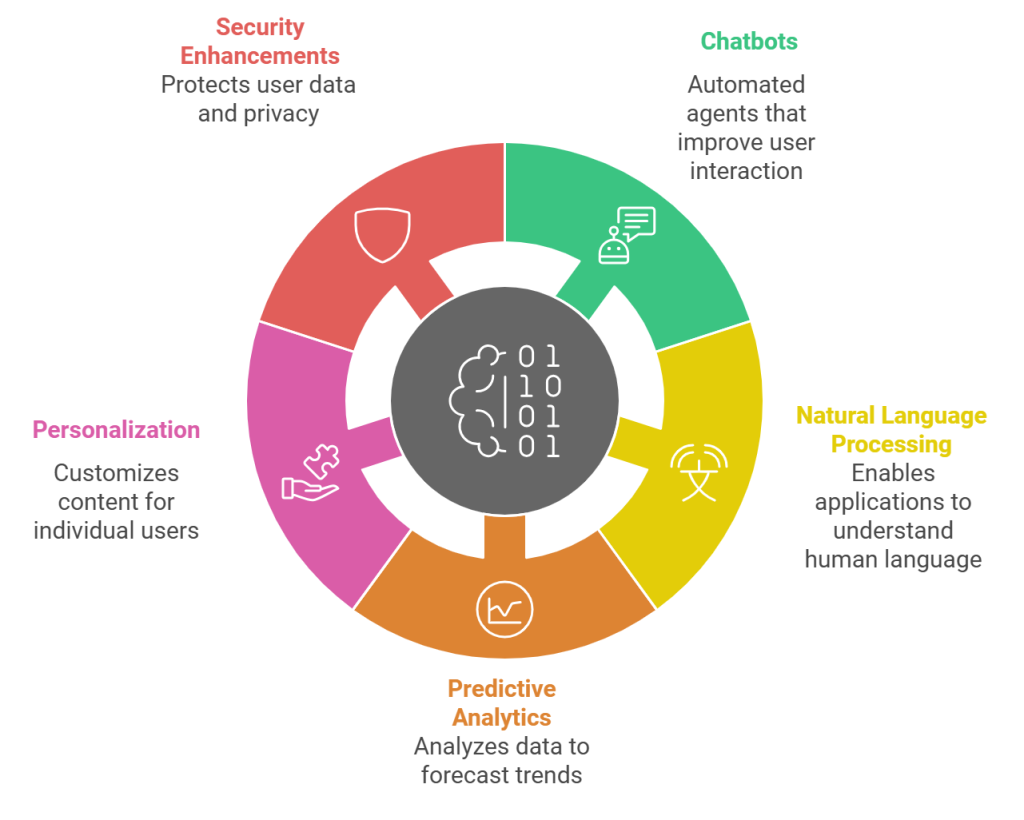
- Chatbots: Automated conversational agents that enhance user interaction.
- Natural Language Processing (NLP): Technology that allows applications to understand and respond to human language.
- Predictive Analytics: Tools that analyze data to predict future trends and behaviors.
- Personalization: Tailoring content and experiences to individual user preferences.
- Security Enhancements: Advanced measures to protect user data and privacy.
The Role of AI Features in Mobile App Development
Incorporating AI into mobile app development allows businesses to improve their applications’ functionality and offer more prosperous, tailored experiences. Integrating AI features such as chatbots, natural language processing (NLP), and predictive analytics enhances user engagement by providing real-time responses, understanding user preferences, and anticipating their needs. Here’s a breakdown of how these AI technologies are applied in mobile app development:
AI-Powered Chatbots for Seamless Communication
Chatbots are among the most commonly implemented AI features in mobile apps. These intelligent virtual assistants can handle customer inquiries, process requests, and even perform transactions, all without human intervention. By leveraging NLP (Natural Language Processing), chatbots can understand and respond to human queries conversationally. This technology enables mobile apps to deliver more interactive and engaging experiences.
Personalized User Experiences Through AI
Personalization is a core element of modern mobile apps. With AI, mobile apps can collect and analyze data to tailor the user experience to individual preferences. For example, AI-powered recommendation systems use user behavior data to suggest products, services, or content that match their interests.
Predictive Analytics for Smarter Mobile Apps
Powered by AI, predictive analytics enables mobile apps to predict future actions and make intelligent suggestions based on historical data. This can range from predicting a user’s next purchase to offering proactive customer support. AI can optimize the app’s features by analyzing trends, ensuring it continuously evolves to meet user needs.
Emotion Recognition for Enhanced User Interaction
Emotion recognition technology uses AI to analyze facial expressions, voice tone, and other behavioral cues to detect emotions. This can be integrated into mobile apps to improve interactions, making them more empathetic and responsive to user needs.
Enhancing Mobile App Security with AI
Security is a critical aspect of mobile app development, and AI can significantly improve its security features. AI algorithms can detect anomalies in user behavior, identify potential threats, and block suspicious activities in real-time. AI-driven security mechanisms provide an extra layer of protection, ensuring mobile apps remain safe from cyber threats.
Implementing AI Features in the Mobile App Development Lifecycle
Agile Software Process for AI Integration
Integrating AI features into mobile apps requires a structured and adaptive approach. The agile software development process is ideally suited for AI feature implementation, as it allows teams to iterate quickly, adapt to changes, and deliver high-quality results efficiently. By incorporating AI into an agile development framework, development teams can ensure that AI features are seamlessly integrated into the app’s design and functionality.
Learn how we implemented agile in our company and improved our efficiency.
Testing AI Features for Optimal Performance
Testing AI features in mobile apps is crucial to ensure they function correctly and provide the expected value. AI models must be trained and tested using real-world data to optimize their accuracy and effectiveness. Automated testing processes can validate AI functionalities like chatbots, predictive analytics, and emotion recognition to ensure they meet user expectations.
The Transformative Impact of AI on Mobile App Development
AI is revolutionizing mobile app development, turning ordinary apps into powerful tools that enhance user experience and business performance. Integrating AI into mobile apps isn’t just a trend—it’s an essential evolution, shaping how businesses connect with their users. From predictive intelligence to personalized experiences, AI is taking mobile apps to the next level, offering smarter, faster, and more intuitive solutions.
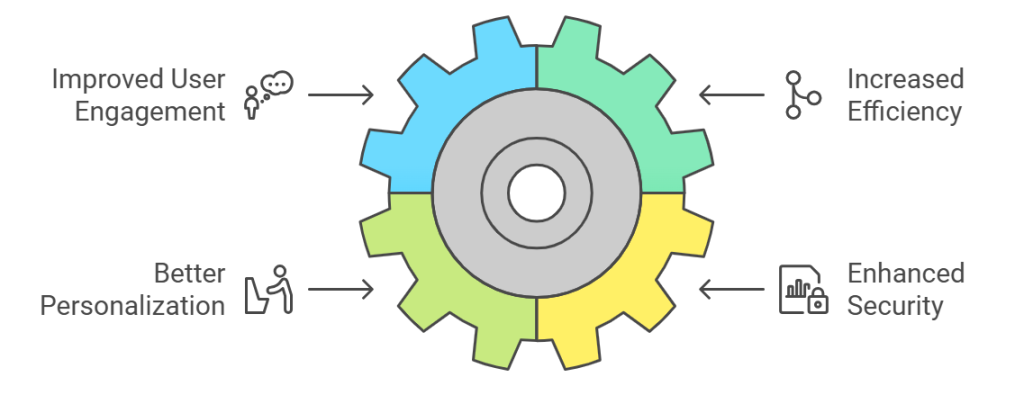
Improved User Engagement
AI features like chatbots, emotion recognition, and predictive analytics fundamentally change how apps engage users. By providing human-like interactions, AI creates dynamic, responsive experiences that feel personal and engaging. With conversational UIs integrated into apps like Google Assistant and Duolingo, users enjoy seamless, real-time conversations that enhance their journey within the app, increasing engagement and user retention.
Increased Efficiency
AI optimizes app performance by automating tasks requiring significant time and effort. Whether it’s through machine learning algorithms predicting routes for ride-sharing apps or automating routine tasks within productivity apps, AI streamlines operations and accelerates responses, creating smoother user experiences. This boost in efficiency doesn’t just improve speed—it also reduces operational costs, making businesses more competitive.
Better Personalization
Personalization is at the core of what makes an app feel truly valuable to users, and AI excels at this. AI can predict preferences by analyzing user behavior and tailor content, offers, and recommendations to individual needs. Apps like Netflix and Spotify leverage AI to suggest movies, shows, and songs based on previous activity, ensuring a customized experience that keeps users engaged and loyal.
Enhanced Security
With increasing concerns over data privacy and security, AI protects user information. Advanced features like biometric authentication, facial recognition, and voice control not only secure app access but also help ensure that sensitive data remains protected from potential cyber threats. As mobile apps handle more personal data, AI’s role in securing that information is crucial for building user trust.
AI is not just reshaping how mobile apps are built; it’s redefining what users expect from them. By harnessing the power of AI, businesses can create apps that engage users, personalize experiences, improve operational efficiency, and secure sensitive data—giving them a competitive edge in an increasingly digital world.
Mobile app development with AI features – BOTTOMLINE
Integrating AI features into mobile app development is transforming how users interact with technology. From enhancing personalization to automating operations, AI drives the next wave of innovation in the mobile app industry. Businesses can create more intelligent, responsive, and secure mobile applications by leveraging AI technologies like chatbots, predictive analytics, and emotion recognition. As AI continues to evolve, the future of mobile app development will become even more personalized and intuitive, paving the way for more innovative, engaging mobile experiences.
By embracing AI, businesses can not only stay ahead of the competition but also deliver apps that truly meet users’ needs and expectations.


Related articles

Vibe Coding Security Risks
Vibe Coding Security Risks: What Every Founder Needs to Know Before Launching Last September, a women-only dating app called Tea...

Why Hiring a Web Designer is Crucial for Your Business
Why Hire a Web Designer? In today’s digital age, your website is often the first impression potential customers have of...

AI Integration for Startups in 2025: Transforming Ideas into Scalable Solutions
What if integrating AI could not only streamline your startup’s operations but also unlock new growth opportunities you never considered...

Ready to Ship Your Vibe Coded App?
You've already done the hard part — validating your idea and building something that works. Let's turn it into a product your users can trust and your business can scale.