

Discover GameChanging Website Developers and Designers in California
Discover GameChanging Website Developers and Designers in California

Introduction
California is the heartbeat of tech innovation – from Silicon Valley’s software giants to LA’s creative studios and San Diego’s thriving startup ecosystem. But even in this world-class environment, one friction point persists: the collaboration between developers and designers.
When designers and developers work in silos, products suffer from misaligned handoffs, unrealistic designs, and technical debt. When they collaborate effectively, the result is seamless user experiences, faster time-to-market, and happier teams.
In this article, we’ll explore the unique dynamics of developer‑designer collaboration in California, common challenges, and actionable strategies to turn friction into synergy.
Developers and Designers in California
Developers and Designers are one of the most important aspects of website development. The other most important aspect of a great website is having amazing web design If you are serious about your website and finding success online, then you should consider taking your web design to the next level! Thankfully, our team at Beesoul is here to help you. With our expertise and experience, we can help you turn your ideas into amazing website designs using the latest technologies.
Beesoul is a multi-award-winning custom website and mobile application development company that helps companies in more than 50 sectors worldwide achieve their goals. Unlike other companies, we create highly secure solutions that rank higher on search engines like Google, Bing, and others. We don’t just design websites or web apps. We hire the best developers and designers for our clients. who use these developed products as your main source of income or as a side business to help you and your family financially.
Why California’s Tech Scene Demands Better Collaboration
California is home to over 1.5 million tech workers, with concentrations in:
- San Francisco / Bay Area – High density of both product designers and full‑stack engineers.
- Los Angeles – Heavy focus on media, e‑commerce, and creative tech.
- San Diego – Growing defense, biotech, and SaaS sectors.
- Sacramento & emerging hubs – GovTech and remote‑first companies.
Despite the talent density, many organizations still operate with a “handoff mentality” – design creates mockups in Figma, tosses them over the wall, and developers build what they can. This leads to:
- Designs that ignore technical constraints (e.g., complex animations, unrealistic API latency).
- Code that misses subtle UX nuances (e.g., hover states, accessibility).
- Rework, missed deadlines, and frustrated teams.
Top 5 Challenges for Developers & Designers in California
| Challenge | Why It Happens | Impact |
|---|---|---|
| 1. Different tools & workflows | Designers live in Figma/Sketch; developers in VS Code/Jira. No shared source of truth. | Misaligned specs, version chaos. |
| 2. Remote & hybrid fragmentation | Many CA teams are distributed (SF to LA). Time zones still exist (3‑hour difference). | Delayed feedback, context switching. |
| 3. Pressure for speed | Startups and big tech alike push rapid releases. | Design shortcuts, technical debt. |
| 4. Lack of shared language | “Pixel‑perfect” vs. “responsive breakpoints” – same words, different meanings. | Rework, passive‑aggressive Slack threads. |
| 5. No early developer involvement | Designers concept in isolation; devs see final designs too late. | Impossible features, painful compromises. |
5 Proven Strategies to Improve Collaboration
1. Adopt a “Design‑Tech” Handoff Protocol
Create a lightweight checklist before any design is handed off:
- Component states (hover, active, disabled, loading, error).
- Breakpoints (mobile, tablet, desktop).
- Accessibility notes (color contrast, focus indicators).
- Edge cases (empty states, long text, missing images).
Pro tip: Use Figma’s Dev Mode or Zeplin to generate specs automatically.
2. Run Bi‑weekly “Design‑Dev Syncs”
Not another status meeting – a focused 30‑minute session where:
- Designers show upcoming work (still in progress).
- Developers flag technical concerns early.
- Both sides agree on what’s feasible vs. what needs a spike ticket.
California example: A San Francisco fintech startup reduced handoff rework by 60% after introducing these syncs.
3. Build a Shared Component Library
Design systems (e.g., Storybook + Figma) are the single source of truth. When both teams use the same named components (Button, Modal, Table), you eliminate translation errors.
- Designers define tokens (color, spacing, typography).
- Developers implement them exactly once.
- Both update in parallel.
4. Rotate Pairing Sessions
Once a sprint, have a designer pair with a developer for 2 hours:
- Developer writes code while designer reviews – they see constraints in real time.
- Designer creates a micro‑interaction while developer gives feasibility feedback.
This builds empathy and kills the “us vs. them” mindset.
5. Use California’s Talent Ecosystem to Your Advantage
You don’t have to solve everything internally. Leverage local meetups, workshops, and fractional experts:
- SF Design Week – Networking & case studies.
- San Diego Tech Hub – Cross‑disciplinary panels.
- LA UX + Dev Slack communities – Real‑time problem solving.
If your internal collaboration is broken, bringing in an external facilitator or a dedicated “design‑dev liaison” can jumpstart change.
Case Study Snapshot: How a Bay Area SaaS Company Fixed Their Workflow
The problem: A 40‑person B2B SaaS company saw 30% of development tickets returned to design for “unclear specs.” Designers blamed developers for “not reading the Figma file.”
The fix: They implemented a “design preview” meeting three days before sprint planning. Developers reviewed designs in Figma and added technical comments before handoff.
The result: Rework dropped by 50%, and both teams reported higher satisfaction on internal surveys.
When to Seek Professional Help
Sometimes internal processes are too entrenched. That’s where an experienced agency like Beesoul comes in. We help California tech companies:
- Audit existing design‑dev workflows.
- Implement design systems and handoff tools.
- Train teams on collaborative best practices.
- Provide fractional design or engineering leads to bridge the gap.
Whether you’re a 5‑person startup in Santa Monica or a 200‑person enterprise in Mountain View, better collaboration is not a nice‑to‑have – it’s a competitive advantage.
Today, we are excited to announce that we’ve been recently recognized for our invaluable efforts and contributions to the market. Clutch has named us as one of the game-changing Developers and Designers in California.
Game-Changing Developers and Designers in California! This is an incredible accolade for us and we are proud to be part of this list.
Press Mentions
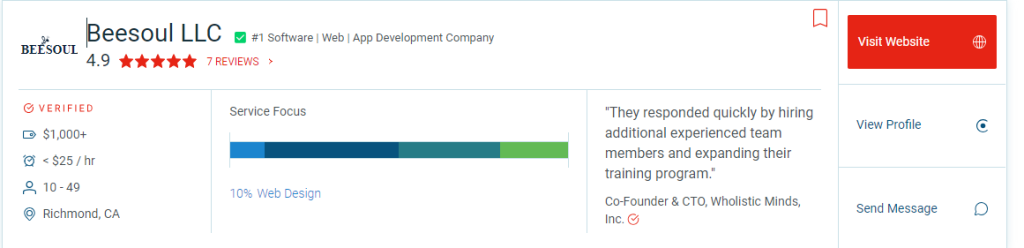
For those of you who aren’t familiar with Clutch, they are a B2B ratings and reviews platform based in Washington, DC. They evaluate technology service and solutions companies based on the quality of work, thought leadership, and client reviews. A rapidly expanding startup, Clutch has become the go-to resource in the agency space and we are one of the game-changing developers and designers in the California area. We are also listed on Dark Scheme Directory.com
Beesoul Reviews
We would love to celebrate this amazing milestone by sharing with you some of the best reviews on our Clutch profile! Here they are
“Using an iterative agile approach we measured the progress of the development in two-week cycles. The overall outcomes were measured by the successful delivery of software features against requirements and timelines.
The team has been on top of technologies and very responsive to the agile environment of a startup. Their suggested design approaches have been very productive and the ability to accommodate the rapid pace of a startup has been part of our success.”
Moshe F Naimi, Co-Founder & CTO at Wholistic Minds, Inc.
“They provided us with reliable post-launch support. Our needs have evolved, but they have been able to help us with these changes as well. We have been using the platform they built since 2021 and we think we can take it for the future too.
The team has been on top of technologies and very responsive to the agile environment of a startup. Their suggested design approaches have been very productive and the ability to accommodate the rapid pace of a startup has been part of our success.”
Asish Thakur, Chairman of Glocal LLC
“They were flexible and adaptable to accommodate our evolving needs. Thanks to the web and mobile apps built by Beesoul, the we improved accessibility to autism support services. They improved user satisfaction and engagement and reduced administrative tasks through automated processes. Overall, the team’s planning and communication skills were impressive. “
Roshan ,Project Manager, IT Company
Beesoul delivered great work. The team completed the project on time, and they managed the engagement effectively. They were highly committed to meeting deadlines, and their resources were truly friendly and professional. This resulted in a truly positive working relationship with the client.
Utsav Pathak , CEO, Hotel & Home
Final Thoughts
Developers and designers in California don’t lack talent or ambition. What they often lack is a deliberate collaboration framework. By adopting shared tools, early syncs, and a culture of empathy, you can ship better products faster – and actually enjoy the process.
Ready to fix your design‑dev handoff? Contact Beesoul for a free workflow audit, or explore our related insights below.

Related articles

How much does a good website designer cost? A 120 second insight
How Much Does a Good Website Designer Cost? Having a well-designed website is crucial for businesses and individuals alike. Whether...

The Manifest Recognizes Beesoul as one of the Most-Reviewed Web Design Agencies in San Jose
A lot of companies are creating and developing their own websites in order to improve their reach and presence online....

Ready to Ship Your Vibe Coded App?
You've already done the hard part — validating your idea and building something that works. Let's turn it into a product your users can trust and your business can scale.