

How AI Improves User Experience in Apps?
How AI Improves User Experience in Apps?

Artificial Intelligence (AI) in User Experience (UX)
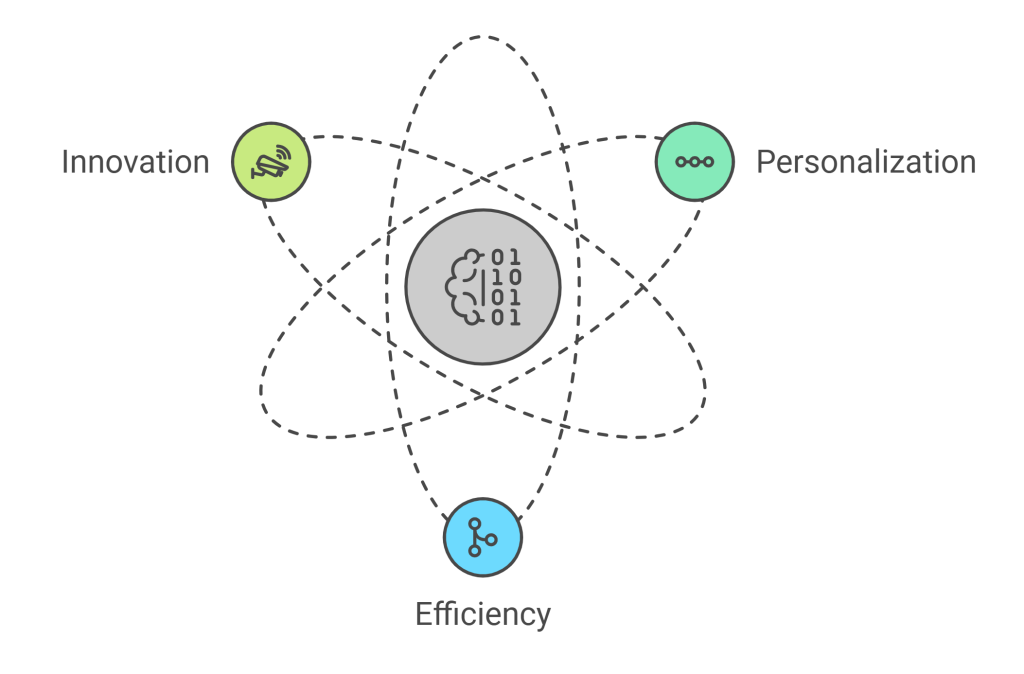
Artificial Intelligence (AI) is revolutionizing industries across the globe, but its transformative impact on app user experience (UX) is particularly noteworthy. As users demand more intuitive, personalized, and seamless interactions, integrating AI into applications has become a game-changer for developers and businesses. This article explores how AI improves user experience in apps by delivering personalization, boosting efficiency, and fostering innovation.
What is AI in the Context of User Experience?
Artificial Intelligence refers to the simulation of human intelligence by machines, especially computer systems. In the realm of app development, AI encompasses machine learning, natural language processing (NLP), and computer vision to automate processes, analyze user behavior, and adapt interfaces to meet user needs.
When incorporated into UX design, AI focuses on making applications:
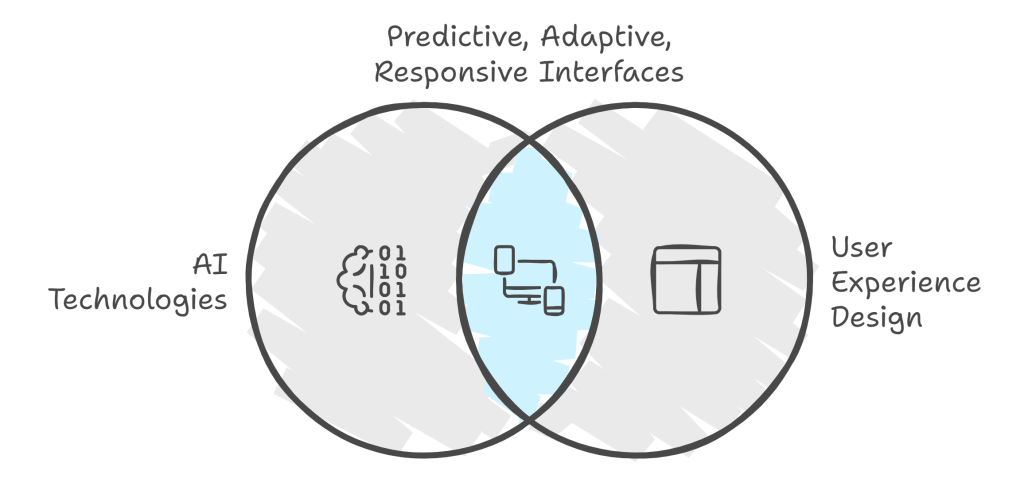
- Predictive: Understanding user intentions to anticipate actions.
- Adaptive: Adjusting functionality based on individual preferences.
- Responsive: Enabling real-time interactions and feedback.
Key Ways AI Enhances User Experience in Applications
1. Personalization at Scale
Personalization is central to delivering exceptional user experiences. AI enables apps to offer highly tailored interactions by analyzing user behavior, preferences, and historical data.
- Content Recommendations
Platforms like Netflix and Spotify use AI algorithms to suggest content based on user preferences and activity patterns. - Dynamic Interfaces
E-commerce apps like Amazon use AI to adapt their interfaces dynamically, displaying products, promotions and deals that resonate with individual users. Different startups can utilize AI to help them create interfaces. - Behavioral Predictions
AI identifies patterns in user behavior to anticipate needs, such as suggesting frequent purchases or forecasting app usage trends.
Impact: Personalization fosters engagement, enhances satisfaction, and increases app retention rates.
2. Enhanced Search Functionality
AI transforms app search experiences from keyword-based searches to intelligent, intent-driven interactions.
- Voice Search and NLP
Apps like Google Assistant and Siri leverage AI-powered natural language processing to understand and respond to voice commands accurately. - Visual Search
AI-enabled visual search, used in apps like Pinterest, allows users to search for items by uploading images. - Semantic Search
AI interprets the context and intent behind search queries to deliver more relevant results.
Impact: Smarter search functionality reduces friction and ensures users find what they’re looking for efficiently.
3. Chatbots and Virtual Assistants
Chatbots and virtual assistants powered by AI have redefined customer support and app interactions.
- 24/7 Availability
AI-driven chatbots provide round-the-clock support, answering queries, resolving issues, and guiding users. - Conversational UX
Virtual assistants like Alexa and Google Assistant make interactions more natural, responding conversationally rather than mechanically. - Multilingual Support
NLP-powered bots can communicate in multiple languages, catering to diverse audiences.
Impact: AI-powered conversational interfaces save time, enhance user satisfaction, and reduce operational costs for businesses.
4. Predictive Analytics for Proactive UX
AI empowers applications to predict user needs and offer proactive solutions, enhancing convenience and efficiency.

- Smart Notifications
AI ensures users receive notifications that are relevant and timely, avoiding spam-like messaging. For example, a fitness app might remind users to hydrate during a workout session. - Behavior Anticipation
AI-driven prediction models in apps like Uber suggest routes, rides, or times based on past usage.
Impact: Anticipatory design ensures users feel understood and valued, fostering loyalty.
5. Image and Voice Recognition
AI-powered image and voice recognition features elevate app functionality, making interactions more seamless and intuitive.
- Face Recognition
Security apps like Apple’s Face ID use AI to authenticate users securely. - Voice Authentication
Banking apps such as HSBC’s mobile platform use voice recognition for secure access and transactions. - Augmented Reality (AR) Integration
AI-powered AR apps, like IKEA Place, let users visualize furniture in their homes through advanced image recognition and rendering.
Impact: These technologies create a more immersive and secure user experience.
6. Emotional Intelligence and Sentiment Analysis
AI-powered apps can analyze user sentiment to tailor interactions and provide emotionally intelligent responses.
- Customer Feedback Analysis
AI tools analyze user feedback, identifying emotions and sentiments expressed in reviews and ratings. - Mood-Adaptive Features
Wellness apps like Woebot adjust their tone and suggestions based on user emotions detected in conversations.
Impact: Sentiment analysis fosters empathy, creating a deeper connection between the user and the app.
7. Improved Accessibility
AI plays a critical role in making apps more accessible to users with disabilities.
- Text-to-Speech and Speech-to-Text
AI tools enable visually impaired users to interact with apps through audio feedback, while voice-to-text solutions assist those with mobility challenges. - Real-Time Translation
Apps like Google Translate use AI to translate text, images, and speech, breaking language barriers.
Impact: Enhanced accessibility ensures inclusivity, allowing more users to benefit from app functionalities.
8. Fraud Detection and Security
AI strengthens app security by identifying anomalies and preventing fraudulent activities.
- Anomaly Detection
Banking apps use AI to flag unusual transactions in real-time. - Behavioral Biometrics
AI tracks typing patterns, mouse movements, and other behaviors to detect unauthorized access attempts.
Impact: Heightened security builds user trust, encouraging continued use of the app.
Challenges of Implementing AI in App UX
While the benefits are substantial, integrating AI into apps poses certain challenges:
- Data Privacy Concerns
AI relies heavily on user data, raising concerns about data security and privacy compliance. Developers must adhere to regulations like GDPR and CCPA to protect user information. - High Development Costs
Building AI-driven apps requires significant investment in infrastructure, talent, and tools, which may be prohibitive for small businesses. - Over-Personalization
Excessive personalization can feel invasive, making users uncomfortable with the app. Striking the right balance is crucial. - Complexity of AI Algorithms
Developing and fine-tuning AI models demands specialized expertise, which may be challenging to acquire or retain.
The Future of AI in App UX
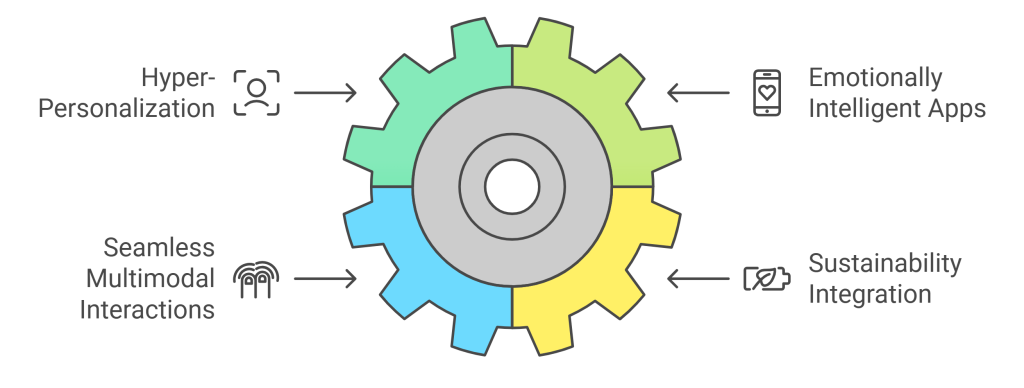
The rapid evolution of AI promises even more advanced user experiences in apps:
- Hyper-Personalization
With advancements in machine learning, apps will deliver experiences tailored to individual micro-preferences. - Emotionally Intelligent Apps
Future apps will leverage advanced sentiment analysis to adapt in real-time to users’ emotional states. - Seamless Multimodal Interactions
AI will enable apps to combine voice, touch, and gestures for more intuitive interactions. - Sustainability Integration
AI will empower eco-conscious apps by suggesting sustainable practices and tracking environmental impact.
Best Practices for Integrating AI into App UX
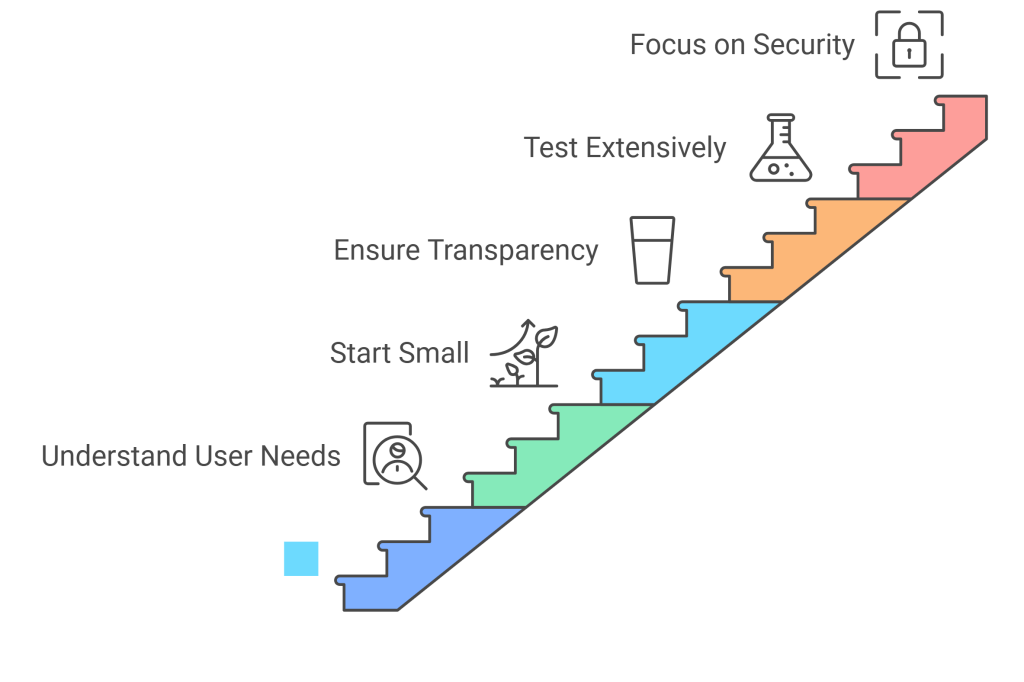
- Understand User Needs
Conduct thorough research to identify pain points and opportunities for AI integration. - Start Small
Implement AI in stages, focusing on high-impact areas first to build trust and demonstrate value. - Ensure Transparency
Clearly inform users about how AI processes their data and provide opt-in mechanisms. - Test Extensively
Regularly test AI features for accuracy, relevance, and usability to avoid negative user experiences. - Focus on Security
Prioritize robust encryption, regular audits, and compliance with data protection laws.
Conclusion
How AI improves user experience in apps is a testament to its transformative power in today’s digital world. AI is transforming how users interact with apps, delivering enhanced personalization, efficiency, and functionality. AI is being used to create/design mobile applications from scratch. By understanding user needs, leveraging advanced algorithms, and addressing challenges, businesses can harness the full potential of AI to create memorable and meaningful app experiences. As technology evolves, the synergy between AI and UX will continue to redefine the digital landscape, paving the way for a more connected and intelligent future.
Book a Call for a consultation about AI integration in your mobile application.

Related articles

How to Use AI in Product Development?
Revolutionizing Product Development Artificial Intelligence (AI) has emerged as a transformative force in product development, offering innovative ways to design,...

The Real Cost of Hiring a Web Developer: Unveiling the Mystery Behind Web Development Pricing
Have you ever wondered why hiring a web developer sometimes feels like trying to decipher an ancient scroll written in...

Trends Shaping Freelance Web Design in 2024
As we move further into 2024, several trends are influencing the freelance web design landscape: Mobile-First Design With mobile devices...

Ready to Ship Your Vibe Coded App?
You've already done the hard part — validating your idea and building something that works. Let's turn it into a product your users can trust and your business can scale.