

Agile Software Development Process: A Guide for SMEs and Startups
Agile Software Development Process: A Guide for SMEs and Startups

Agile software development is a flexible and iterative approach that prioritizes adaptability, collaboration, and continuous improvement. This methodology has revolutionized how software is created, delivering tangible value quickly and efficiently. For SMEs and startups, Agile provides the perfect framework to respond to evolving market demands and customer needs.
In this guide, we’ll explore the Agile software development process as well as core principles, practical applications, and actionable steps for implementation, along with its semantic significance for search optimization.
What is Agile Software Development?
Agile software development is a methodology designed to deliver incremental results through iterative cycles, commonly referred to as sprints. Each sprint focuses on achieving a specific goal or delivering a particular feature, ensuring steady progress and constant feedback.
Core Principles of Agile
Agile methodology is built on a foundation of core principles that guide teams in delivering value efficiently and effectively. These principles encourage adaptability, collaboration, and a focus on delivering high-quality products. Here’s an overview of the key principles:
1. Customer Collaboration Over Contract Negotiation
Agile places a strong emphasis on continuous interaction with customers and stakeholders throughout the development process. This principle encourages teams to:
- Engage Regularly: Maintain open lines of communication to gather feedback and adjust the product according to customer needs.
- Prioritize User Needs: Focus on delivering features that provide real value to users rather than strictly adhering to contractual obligations.
- Build Relationships: Foster trust and partnership with stakeholders, leading to better outcomes and satisfaction.
2. Responding to Change Over Following a Plan
In Agile, the ability to adapt is crucial. This principle highlights the importance of:
- Flexibility: Embrace changes in requirements, even late in development, as they can lead to better product outcomes.
- Iterative Development: Use short development cycles (sprints) to allow for regular reassessment and adjustment of priorities.
- Continuous Improvement: Encourage teams to reflect on their processes and outcomes regularly, making necessary adjustments to enhance efficiency.
3. Working Software Over Comprehensive Documentation
Agile prioritizes delivering functional software over extensive documentation. This principle supports:
- Rapid Delivery: Focus on producing working software that meets user needs quickly rather than getting bogged down in detailed documentation.
- Just Enough Documentation: Create documentation that is sufficient for understanding the product without overwhelming the team or stakeholders.
- Feedback Loops: Utilize working software as a basis for gathering feedback, which can be more valuable than theoretical documentation.
4. Individuals and Interactions Over Processes and Tools
Agile recognizes that successful projects depend on people rather than rigid processes or tools. This principle emphasizes:
- Team Empowerment: Encourage self-organizing teams that can make decisions and take ownership of their work.
- Effective Communication: Promote open dialogue among team members, fostering collaboration and creativity.
- Value Human Element: Understand that relationships and interactions are key drivers of project success, often leading to innovative solutions.
The Building Blocks of Agile
To understand Agile, it’s essential to look at its foundational elements and how they work together to create a dynamic development environment.
Key Frameworks in Agile
- Scrum: A structured framework involving roles such as Scrum Master and Product Owner, sprint planning, and daily stand-ups to ensure team alignment.
- Kanban: Focuses on visualizing work in progress through boards, ensuring a smooth flow of tasks.
- Extreme Programming (XP): Enhances software quality with practices like pair programming and test-driven development.
Key Entities in Agile
In Agile methodology, several key entities play crucial roles in ensuring effective project delivery.
The Agile Team consists of cross-functional members skilled in various domains, enabling timely delivery and adaptability to change.
The Customer is an integral part of the feedback loop, shaping the product based on real-world requirements, which helps ensure that the final output meets user needs.
The Sprint Backlog defines short-term tasks and goals, providing clarity and focus for development teams as they work towards their objectives.
Finally, the Product Owner oversees the product backlog and prioritizes tasks, aligning development efforts with business objectives to maximize value.
Together, these entities create a dynamic environment that fosters collaboration and responsiveness in Agile projects.
How Agile Transforms Software Development
Agile stands apart from traditional methodologies by its focus on collaboration, iterative progress, and customer-centric outcomes. For SMEs and startups, Agile offers numerous advantages:
Benefits for SMEs and Startups
- Rapid Delivery of Features: Agile’s iterative nature allows teams to deliver functional features faster, enabling startups to test and validate ideas in real-time.
- Cost Efficiency: By focusing on core functionalities and adjusting priorities based on feedback, Agile reduces the risk of overbuilding unnecessary features.
- Improved Collaboration: Agile fosters open communication between developers, stakeholders, and customers, ensuring alignment on priorities.\
The Process
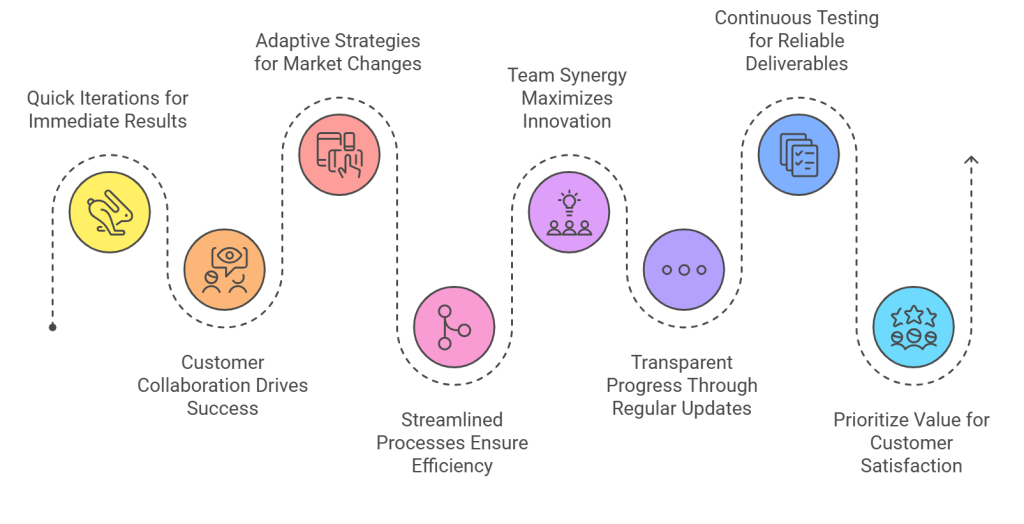
Agile software development process for your growth.
- Quick Iterations for Immediate Results
Rapid cycles to meet evolving needs. - Customer Collaboration Drives Success
Engage actively for tailored solutions. - Adaptive Strategies for Market Changes
Stay relevant with flexible adjustments. - Streamlined Processes Ensure Efficiency
Deliver faster with smarter workflows. - Team Synergy Maximizes Innovation
Collaboration fuels groundbreaking ideas. - Transparent Progress Through Regular Updates
Stay informed with consistent communication. - Continuous Testing for Reliable Deliverables
Ensure quality with frequent checks. - Prioritize Value for Customer Satisfaction
Solutions crafted to exceed expectations. - Scalable Solutions for Business Growth
Expand capabilities effortlessly over time. - Agile Empowers Your Business Journey
Transform challenges into growth opportunities.
“Partner with us for agile-driven success!”
Agile in Action: Beesoul’s Agile Journey
Beesoul, our growing tech firm, used Agile to address project bottlenecks and improve time-to-market. By adopting the Scrum framework, they streamlined their processes, enhanced team productivity, and delivered customer-centric products effectively.
Steps to Implement Agile in Your Organization
Implementing Agile in your organization requires a comprehensive approach that transcends mere procedural changes; it necessitates a cultural shift towards collaboration, flexibility, and continuous improvement. Here’s a detailed guide on how to successfully embrace Agile principles:
Step 1: Build an Agile Team
Start by forming a cross-functional team that includes diverse skill sets such as developers, designers, and quality assurance specialists. Clearly define roles within the team to enhance accountability and efficiency. For instance, appoint a Scrum Master who will facilitate the Agile process and help resolve any obstacles that arise. Additionally, designate a Product Owner responsible for managing the product backlog and ensuring effective communication with stakeholders. This structure promotes collaboration and ensures that all team members are aligned with the project goals.
Step 2: Develop a Product Backlog
Create a prioritized list of features and tasks that align with your organization’s business objectives. This product backlog serves as the foundation for your Agile workflow. Utilize Agile project management tools such as Jira, Asana, or Monday.com to effectively manage and track the backlog. A well-maintained backlog not only clarifies priorities but also helps the team focus on delivering value incrementally.
Step 3: Conduct Sprint Planning
Break down the product backlog into smaller, manageable tasks for each sprint, typically lasting two to four weeks. This planning phase is crucial for delivering incremental value to customers while allowing for adjustments based on feedback and changing requirements. During sprint planning sessions, ensure that all team members understand their responsibilities and the goals for the upcoming sprint.
Step 4: Foster a Feedback-Driven Culture
Establish a culture that values feedback by holding regular sprint reviews and retrospectives. These meetings provide opportunities to gather insights from team members and stakeholders, evaluate progress, and identify areas for improvement. Encouraging open dialogue during these sessions helps teams learn from both successes and challenges, fostering an environment of continuous growth.
Step 5: Leverage Agile Tools and Techniques
To enhance productivity and streamline workflows, implement Agile tools such as Kanban boards for visual task management and automated testing frameworks to ensure software quality. These tools can help facilitate communication within teams and improve overall efficiency by reducing bottlenecks in the development process.
By following these five steps—building an Agile team, developing a product backlog, conducting sprint planning, fostering a feedback-driven culture, and leveraging Agile tools—your organization can effectively implement Agile principles. This transformation not only enhances project delivery but also cultivates a collaborative environment that embraces change and fosters innovation.
Remember, the journey to becoming Agile is iterative; be open to learning from each cycle and continuously improving your processes.
Frequently Asked Questions (FAQs)
Q1: How is Agile different from Waterfall?
Unlike Waterfall, which follows a linear sequence of phases, Agile is iterative and adaptable. Teams work in short cycles, delivering incremental updates rather than waiting for a final release.
Q2: Can Agile work for non-technical teams?
Yes! Agile principles can be applied across various domains, including marketing, HR, and product management, to improve efficiency and adaptability.
Q3: How long does it take to adopt Agile effectively?
Agile adoption varies depending on the team’s willingness to embrace change and the complexity of the project. However, most organizations see significant benefits within a few months.
The Bottom Line
In conclusion, embracing Agile methodology can significantly transform the way your organization operates, fostering a culture of collaboration, flexibility, and continuous improvement. By building a cross-functional Agile team, developing a prioritized product backlog, and conducting effective sprint planning, you set the foundation for delivering incremental value to your customers. Additionally, fostering a feedback-driven culture through regular reviews and retrospectives ensures that your team learns and adapts continuously.
Leveraging Agile tools and techniques further streamlines workflows enhances productivity, and supports effective communication within the team. As you embark on this journey toward Agile adoption, remember that it is not merely about following a set of procedures but about instilling a mindset that embraces change and innovation.
With commitment and an iterative approach, your organization can harness the full potential of Agile principles, leading to improved project outcomes and greater customer satisfaction.


Related articles

Optimize Mobile UX: Top 5 Practices for Better Engagement
Credit:- Freepik Focusing on mobile user experience is very important for online business success. Almost 60% of internet traffic comes...

The Ultimate Guide to Building a High-Performing Law Firm Website in 2025
Credit:- Canva Your law firm website design is more than just a digital presence—it’s your first impression, your brand, and...

Best Practices for MVP Development in 2025
Minimum Viable Product (MVP) development has evolved significantly in 2024, becoming a cornerstone for businesses aiming to validate ideas, attract...

Ready to Ship Your Vibe Coded App?
You've already done the hard part — validating your idea and building something that works. Let's turn it into a product your users can trust and your business can scale.